Group Study vs Solo Study: Which Is Better for You?
Is it better to hit the books alone or assemble a team? While solo study offers deep focus, group study provides unique collaboration and accountability. Read our complete guide to find out which method suits you best and learn how combining both can lead to academic success. 🎓
Introduction:
When exam season approaches or a difficult new subject is introduced, a very common question pops up: Should I tackle this alone, or should I get a study group together? It’s not a simple case of one being definitively "better" than the other. Both solo studying and group sessions offer very different but equally valuable benefits. The real trick to boosting your grades is understanding when each approach helps you the most.
The Power of Solo Study: Deep Focus and Efficiency
For many students, the gold standard for learning is sitting down alone with their books. There is a very good reason for this. Solo studying is often the best approach when you need to focus deeply or when you are pressed for time.

Alt Text: A student sitting alone at a desk in a quiet library, focused on a laptop and textbooks while taking notes.
One of the biggest advantages of working alone is complete control. You can work through a difficult chapter as slowly as you need to, or you can speed through sections you already understand without having to wait for others to catch up. This personalized pace makes your study time highly efficient.
Furthermore, working alone means you eliminate the social chatter. For many, this is the only way to enter a "flow state"—that focused mindset which is crucial for tackling complex problems or memorizing a long list of facts. It also gives you a chance to be brutally honest with yourself about which topics you still don't understand.
The Benefits of Group Study: Collaboration and Accountability
On the other hand, turning study time into a social activity can offer dramatic benefits that you just can't get on your own. Group study turns passive reading into active learning.

Alt Text: A group of diverse students sitting around a table in a library, smiling and discussing their study materials together.
One of the most powerful concepts in education is known as the "Protege Effect." This idea suggests that the best way to prove you understand a concept is by teaching it to someone else. In a group setting, you have constant opportunities to do this. When you explain a theory to a friend, you solidify your own knowledge.
Groups also help you identify and fill in your knowledge gaps. We all have blind spots; a friend might have a better way to visualize a complex biological process or know a shortcut for a math problem that you completely missed. Lastly, don't underestimate the power of accountability. It is much easier to skip a scheduled solo study session than it is to bail on a group that is expecting you at a specific time.
Making the Hybrid Approach Work
So, which is better? The answer is often both. The most successful students are usually those who have mastered a hybrid approach, strategically using both methods.
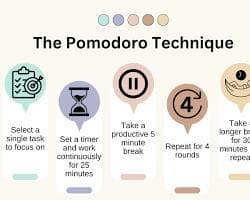
Alt Text: Close up of a student using a study planner and a timer to manage their study sessions effectively.
The key is timing:
Start Solo: Use solo study sessions for your first pass at new material. Read the chapters, watch the lectures, and identify the areas that confuse you. This builds your foundational knowledge.
Move to Group: Once you have that foundation, meet with your group. Use this time not to re-read the chapter, but to discuss the complex parts, quiz each other on formulas, and teach each other the most difficult concepts.
Final Review: You can do practice exams solo, and then meet as a group to compare answers and discuss why certain questions were tricky.
Share this article: